Quick Summary
Here are the key points to keep in mind as you read:
- Carpenter ants and termites both target wood, but they are completely different insects with different behaviors.
- The fastest way to tell them apart is to look at the body shape, the antennae, and the wings.
- Termites eat wood for food, while carpenter ants tunnel through wood to nest and push the debris back out.
- Carpenter ant damage often shows up as smooth tunnels and small piles of sawdust, while termite damage tends to stay hidden until it is extensive.
- Both pests are difficult to eliminate fully without professional help, and the right treatment depends on correctly identifying the culprit.
- Manning's Pest Control offers carpenter ant control and termite control throughout Brunswick County and the surrounding coastal communities.
Why Confusing the Two Causes Problems
It is easy to understand why these pests get mixed up. Both are small, both are drawn to wood, and both can leave behind winged swarmers that look alike at a quick glance. The trouble is that an incorrect identification can lead to wasted time, wasted money, and ongoing damage to your home.
Termites are widely considered one of the most destructive household pests in the country. A commonly cited industry figure puts termite-related property damage at more than $5 billion every year in the United States, and most standard homeowner insurance policies do not cover that kind of loss. Carpenter ants are less catastrophic in most cases, but a large, established colony can still hollow out structural wood over time. Treating one when you actually have the other rarely solves the problem and often allows the real culprit to keep working unseen.
How to Tell the Difference: Carpenter Ant vs. Termite Identification
If you are wondering how to tell the difference between a carpenter ant and a termite, you can usually narrow it down by examining three features up close. A magnifying glass and a steady hand help, and so does good lighting.
Body Shape and Antennae
This is the clearest giveaway when you are comparing the two insects side by side:
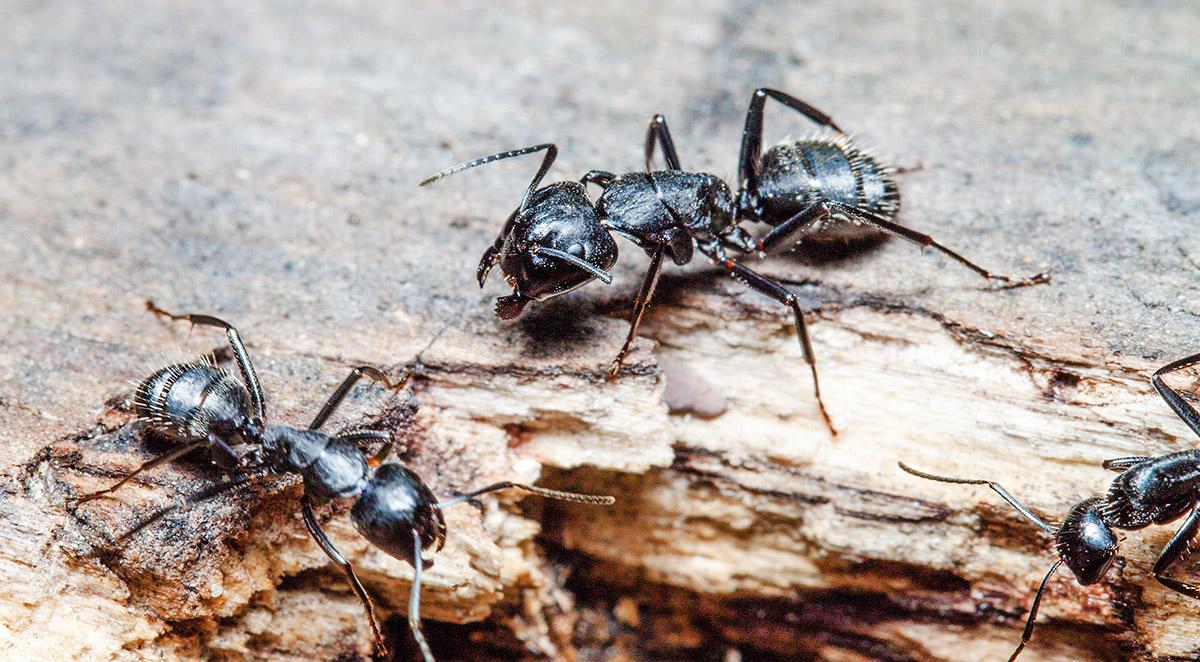
- Look at the waist. Carpenter ants have a clearly pinched, narrow waist that gives them an hourglass shape. Termites have a broad, straight body with no defined waist.
- Check the antennae. Carpenter ants have bent, elbowed antennae. Termites have straight, beaded antennae that look like tiny strings of pearls.
- Note the color. Carpenter ant workers tend to be darker, often black or reddish, while termite workers are usually pale and almost translucent.
Wings
Both pests produce winged reproductive members, called swarmers, during certain times of year. The wings tell you a great deal:
- Carpenter ants have two sets of wings of different lengths, with the front pair noticeably longer than the back pair.
- Termites have two sets of wings that are equal in length and extend well past the body.
- Discarded wings near windowsills, doors, or light fixtures are a common sign of either pest, but matching pairs of equal-length wings point strongly toward termites.
Behavior and Visibility
Habits also separate the two. Carpenter ants are often visible, traveling along countertops, baseboards, and exterior walls in search of food, because they eat proteins and sugars rather than the wood itself. Termites, by contrast, avoid light and open air. They stay hidden inside wood or travel through protective mud tubes, so you may have a sizable colony without ever seeing a single insect in the open.
For a broader look at the insects that threaten the wood in your home, our overview of wood-destroying insects and how to keep them out is a helpful companion to this guide.
Understanding the Damage Each Pest Causes
Identification only gets you so far. The way each pest damages your home is just as revealing, and it shapes how serious the situation really is.
Carpenter Ant Damage
Carpenter ants do not eat wood. Instead, they excavate it to build nests, carving out smooth galleries and tunnels where they raise their colony. Because they remove the wood rather than consume it, carpenter ant damage often leaves behind telltale clues that termites do not.
Common signs of carpenter ant damage include:
- Small piles of what looks like sawdust, called frass, near baseboards, window frames, or beneath wooden structures.
- Smooth, clean tunnels inside the wood that look almost sanded when you break a damaged piece open.
- A faint rustling sound inside walls or wood during quiet hours, which can indicate an active colony.
- Winged ants emerging indoors, especially in spring, which often signals an established nest nearby.
Carpenter ants tend to prefer wood that is already damp or compromised. Areas with moisture problems, such as around leaky plumbing or in poorly ventilated crawl spaces, are especially attractive to them. Addressing the underlying moisture is a big part of long-term control, which is one reason services like crawl space encapsulation can support a healthier, less pest-friendly home.
Termite Damage
Termites are a quieter and often more serious threat. They consume wood from the inside out, which means a beam can look perfectly fine on the surface while being severely weakened within. This hidden quality is exactly what makes them so dangerous to coastal homes.
Watch for these indicators of termite activity:
- Mud tubes running along foundations, walls, or crawl space surfaces.
- Wood that sounds hollow or papery when you tap it.
- Bubbling, uneven, or blistered paint on wood surfaces.
- Doors or windows that suddenly stick or no longer close properly.
- Discarded wings near entry points and a faint musty or earthy smell.
The contrast is important. Carpenter ants leave debris behind because they push waste out of their tunnels, while termites leave the inside of the wood packed with soil and droppings. If you find clean galleries and sawdust, you are likely dealing with ants. If the wood is hollow and there is no sawdust to be found, termites are the more probable answer.
What to Do If You Suspect Either Pest
Once you have a reasonable idea of what you are facing, the next step is to act thoughtfully rather than reaching for a store-bought spray. Here is a practical sequence to follow.
- Document what you see. Take clear photos of the insects, any wings, frass, mud tubes, or damaged wood. These details help a professional confirm the species quickly.
- Avoid disturbing the area too much. Crushing a few ants or knocking down a mud tube can scatter the colony or push the problem deeper into your home.
- Address obvious moisture sources. Fix leaks, improve ventilation, and clear away wood debris or mulch piled against your foundation, since dampness invites both pests.
- Resist the urge to DIY a full treatment. Surface sprays often kill the insects you can see while leaving the colony intact, which gives you a false sense of resolution. Our article on why you should not DIY your termite control explains the risks in detail.
- Schedule a professional inspection. A trained technician can confirm the species, locate the nest or colony, and recommend a treatment plan matched to the actual problem.
Acting early almost always means a simpler, less costly solution. Both pests are far easier to manage before they have had years to expand.
Frequently Asked Questions
How can I quickly tell a carpenter ant from a termite?
Look at three features: the waist, the antennae, and the wings. Carpenter ants have a pinched waist, bent antennae, and wings of unequal length. Termites have a broad waist, straight antennae, and two sets of equal-length wings. Color is another clue, since ants are usually darker and termites are pale.
Is carpenter ant damage as serious as termite damage?
In most cases, termites cause faster and more severe structural damage because they consume wood directly and work hidden from view. Carpenter ants typically cause slower damage by tunneling for nests, but a large, long-established colony can still compromise wood over time. Both warrant prompt attention.
Why do I keep seeing ants even after spraying?
Store-bought sprays usually kill only the workers you can see while leaving the colony and its queen unharmed. The colony simply continues to produce more ants. A professional treatment targets the nest itself, which is why over-the-counter products so often fall short.
Do carpenter ants and termites swarm at the same time?
Both produce winged swarmers, often in spring, which is part of why they are confused. The wings are the giveaway. Equal-length wings suggest termites, while unequal-length wings suggest carpenter ants. Finding discarded wings indoors is a strong reason to schedule an inspection.
Should I get an inspection if I am not sure which pest I have?
Yes. A professional inspection removes the guesswork, confirms the species, and identifies the source of the problem. Because the correct treatment depends entirely on accurate identification, an inspection is the most reliable first step. You can contact our team to arrange one.
Protect Your Home with Confidence
Carpenter ants and termites may both threaten the wood in your home, but they are very different pests that demand very different responses. Knowing how to read the clues, from body shape and wings to the type of damage left behind, puts you in a far stronger position to protect your property. When in doubt, a professional inspection is the surest way to identify the problem and stop it before it grows.
If you have noticed signs of either pest in your home, the experienced team at Manning's Pest Control is ready to help you sort it out and put a real solution in place. Reach out through our contact page to schedule an inspection and protect your home season after season.